

Reform of the National Water Law in Mexico: A new paradigm of water management for industries
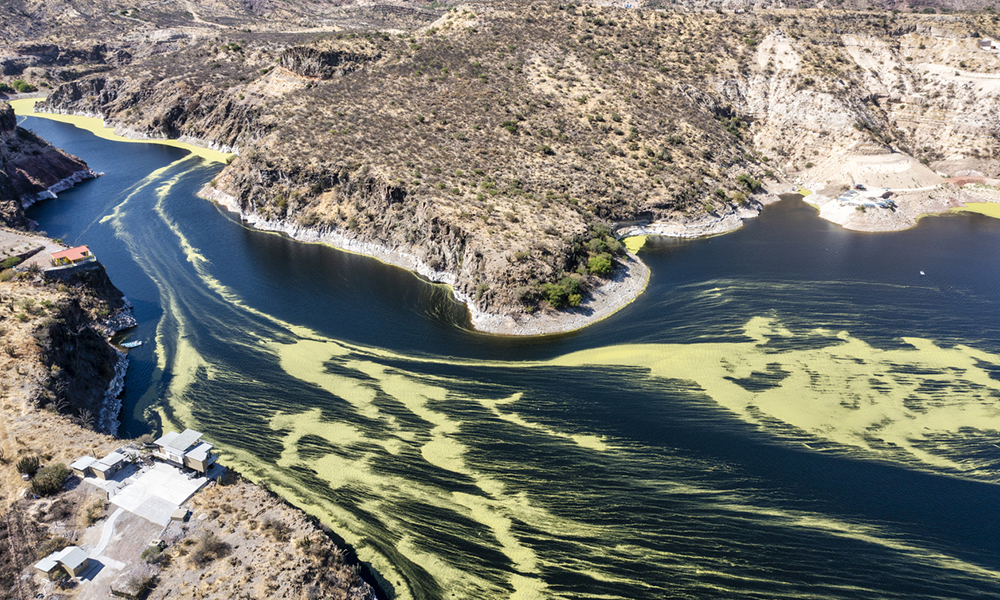
The reform of the National Water Law introduces profound changes in the regulation of the use and exploitation of water in Mexico, prioritizing human consumption and sustainability. It also strengthens state control, tightens the concession regime and establishes stricter obligations for all users of water resources.
The recent reform of the National Water Law profoundly transforms the legal framework that regulates the use, management and exploitation of water in Mexico. The amendments strengthen public water resource management and introduce stricter obligations for all users (industrial, commercial, agricultural, tourism, real estate and services) with a focus on sustainability, water security and social participation.
The most relevant changes and their practical implications for the productive sector are presented below.
1. Priority of human and domestic consumption
- The priority of human and domestic use is established as the guiding axis. This means that all concessions, authorizations and extensions must comply with this criterion.
- The National Water Commission (CONAGUA) may reduce or cancel concessioned volumes when there is a risk for such priority use, after technical assessment and notification to users.
- Water responsibility, which is required of all users, is incorporated, as well as the principle of water security to guarantee the human right to water.
Recommendation to be followed by companies:
Maintain a solid documentary file on the use of the resource, compliance with the conditions of the titles and the operation of the water infrastructure to avoid sanctions and facilitate the obtaining of extensions or new titles.
2. New regime of concessions, assignments and reassignments
The reform tightens and redefines the criteria for the awarding, modification and continuity of degrees:
- The transfer of concessions and permits is prohibited, except in specific cases: succession, mergers or spin-offs, transfers of property with linked titles or transfer of ejido/communal lands.
- Expedited reassignment procedures are created, without availability analysis.
- Extensions will be granted only if continuous water compliance is accredited.
- The use of the non-expiry guarantee fee will be limited to two extensions.
- The possibility of modifying the authorized use will be eliminated, avoiding the commodification of water.
- A voluntary regularization program will be implemented for titles and works in free delivery areas.
Recommendation to follow:
Prepare water compliance documentation in advance to take advantage of regularization mechanisms and ensure operational continuity.
3. Promotion of reuse and control of discharges
The reform promotes sustainable water management by:
- Incentives for the reuse of treated and untreated wastewater, in accordance with the official Mexican standard (NOM) and international best practices.
- The obligation to have authorization from CONAGUA for rainwater harvesting systems for uses other than domestic or urban.
- Stricter conditions for the treatment, reuse and control of industrial discharges.
- The obligation to protect ecosystems, bodies of water and human health.
Recommendation to follow:
Implement discharge control and monitoring programs, as well as reuse strategies to reduce criminal and administrative risks, and generate operational efficiencies and significant savings.
4. Sanctioning regime and water crimes
The reform establishes a much more severe sanctioning regime:
- Fines of up to 30,000 units of measure and updating (UMAs), temporary closures and revocation of titles.
- Greater number of infractions and expansion of CONAGUA's inspection powers.
- Aggravated penalties for recidivism.
- Evaluation of the user's water liability when determining penalties.
- Single exemption for non-serious infractions, if corrected in a timely manner.
- Classification of water crimes, including the manipulation of measurement systems, the alteration of channels, illegal extraction and acts of corruption linked to the management of the resource.
Recommendation to follow:
Adopt water traceability and compliance systems to avoid penalties, reduce criminal risks and ensure continuity in operation and access to the resource.
5. Transitional provisions and implementation rules
- The reform enters into force the day after its publication.
- 180 days are granted to issue regulations and update the regulations.
- The above legislation will be applied temporarily, except for transfers and changes of use (which are prohibited).
- The reassignment mechanism will be applicable within the first 180 days.
- The current guarantee fee rules will remain in force until a new regulation is issued.
- Regularization and simplification programs will be issued with priority in vulnerable areas.
- The rules on water liability and the modernization of metering systems are still pending.
In conclusion, the reform marks a paradigm shift: greater centralization of the State, an emphasis on sustainability, strict control of water use, and a reinforced sanctioning regime. Companies will need to adapt quickly to ensure operational continuity and avoid legal contingencies.
Contacts


-
+52 55 5029 8500

-
+52 55 5029 8500