ESG: the balance between profitability and sustainability in companies’ day-to-day operations
Integrating ESG criteria is no longer a secondary concern but rather a fundamental element of business strategy. How do profitability and sustainability go together? How can greenwashing be avoided? And what role do investors, boards of directors and legislation play in this transformation?
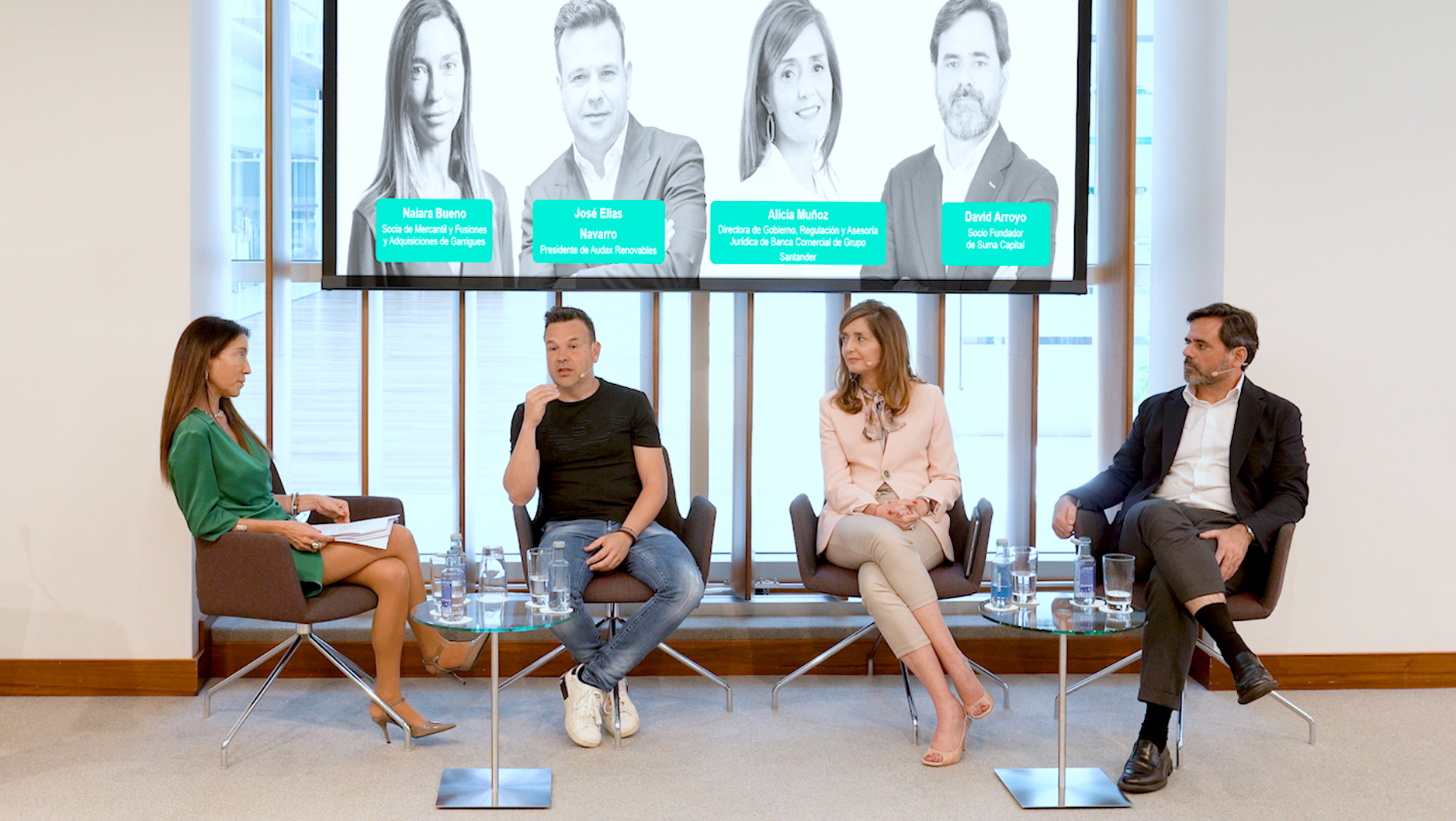
These and other questions formed the substance of the latest Garrigues Sustainable Dialog, entitled The balance between sustainability and profitability. The role of each stakeholder in the green economy, which brought together representatives from the legal, financial and energy sectors: Rosa Zarza and Naiara Bueno from Garrigues (senior partner and Corporate and M&A partner, respectively); José Elías, chairman of Audax Renovables; Alicia Muñoz, head of Governance, Regulatory Affairs and Legal at Santander España; and David Arroyo, founding partner of Suma Capital. The debate was divided into three blocks —strategy and governance, legislation, and innovation— which formed the backbone of a discussion that made it clear that sustainability and business are no longer opposing forces.
Governance: when ESG enters the boardroom
For Alicia Muños, “the change has been a radical one”. The challenge, she stressed, is to provide boards of directors with effective monitoring tools, to ensure the traceability of reported data and to guarantee regulatory compliance in an increasingly regulated environment. To ensure ESG permeates business culture, “it must be integrated into the business, forming part of the company’s decision-making process and mission, while also being flexible enough to adapt when necessary”.
David Arroyo, explained Suma Capital’s position, focusing on how sustainability now drives the firm’s competitive strategy: “It has been a gradual but decisive shift. Today it is a cornerstone of our value proposition”.
José Elías, offered insight from the standpoint of both SMEs and listed companies: “ESG began as just another regulatory requirement, but it has proven its worth: issuance of green bonds, attracting talent, identification with the company. The challenge is to get the wider business community on board.”
Legislation: between opportunity and overregulation
Legislation has served as a catalyst but also a wake-up call. Despite recognizing its value, José Elías warned that “overregulation is a concern” because “we need to prevent it becoming a burden that hinders progress”. In this respect, the three speakers agreed that ESG principles should be treated as a strategic opportunity.
In discussing how ESG forms part of the day-to-day operations of the regulatory body, Alicia Muñoz stressed that “profitability and sustainability are not mutually exclusive. Sustainability is a real value creation lever, but it must be managed with a reasonable approach”, adding that “ESG must form part of the business so that it permeates the day-to-day operations of the company.” David Arroyo was even more emphatic: “That debate is over. ESG is no longer something you defend to stakeholders with words but rather with results.”
Innovation and investment: drive from investors
Pressure from investors has been key. For the founding partner of Suma Capital, “they have trusted in the green transition and continue to guide the way”. José Elías added: “Without that impetus, the change would not have been as radical. The associated benefits, such as access to finance or improved reputation, have enabled ESG to extend throughout the business.”
Because at the end of the day, as one of the speakers remarked, it is not just about compliance. And this crossroads, the balance between impact and profitability, between obligation and opportunity, between regulation and innovation, will be the real stress test for companies in the future.
Contact