EU-Mercosur 2026 agreement: the largest free trade area in the world and its importance for Polish business
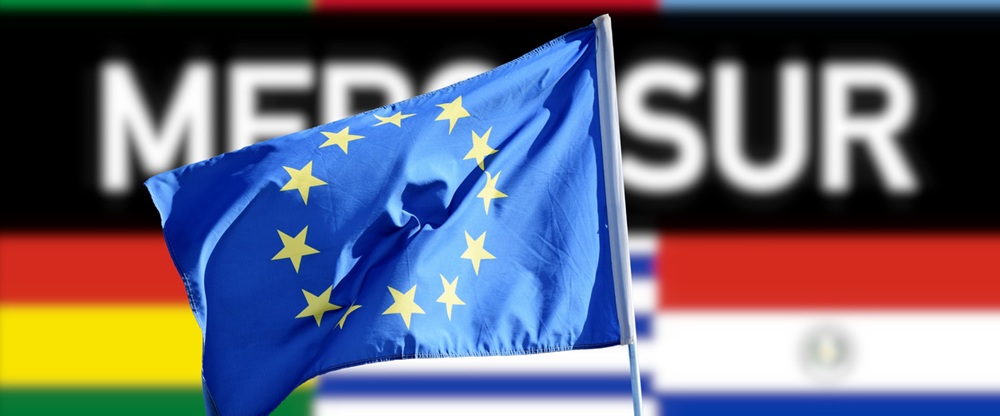
The EU-Mercosur agreement, which will be provisionally applicable since May 2026, creates the world’s largest free trade area, removes key tariffs and opens up new opportunities for European and Polish companies in industry, energy, raw materials and public procurement.
What is Mercosur?
Mercosur (Spanish: Mercado Común del Sur - Southern Common Market) is a trading bloc created in 1991 by the Treaty of Asunción, bringing together the largest economies in Latin America: Brazil, Argentina, Paraguay and Uruguay. Together, these four countries represent a GDP of about EUR 2.7 trillion (data from the European Commission) and are inhabited by nearly 270 million people. Mercosur's aim is to remove trade barriers between Member States, coordinate economic policies and maintain a common external customs tariff with third countries.
Legal structure of the agreement
The agreement was formalized in the form of two separate legal instruments. The first is the EU-Mercosur Partnership Agreement (EMPA), which includes political dialogue, sectoral cooperation and a trade pillar. The EMPA is a mixed agreement, which means that its full entry into force requires ratification by the European Parliament and the national parliaments of all 27 EU Member States. The second instrument is the Interim Trade Agreement (iTA), a temporary trade agreement that covers only trade and investment commitments and is an agreement that falls within the exclusive competence of the EU – so it does not require national ratification. It is the iTA that can be used temporarily, even before the full EMPA enters into force. Ultimately, the iTA will be repealed and replaced by EMPA after its ratification.
Main commercial assumptions
The trade pillar of the agreement provides for the gradual elimination or reduction of customs duties on more than 90% of goods in mutual trade (91% of Mercosur duties on EU exports and 92% of EU duties on Mercosur exports). Import duties on certain products, such as chocolate and confectionery, wines and spirits, chemical products and machinery parts, will be reduced to 0% in the first year of the agreement. Customs duties on other products will be phased out over a period of 4 to 15 years. The reduction will mainly apply to food products (current Mercosur tariffs: 20-35%), machinery (14-20%), cars and their parts (up to 35%), pharmaceuticals (up to 14%) and chemicals (up to 18%). In addition, the agreement provides for a significant simplification of customs procedures, mutual recognition of technical certificates and the opening of the public procurement market. It is worth to mention that Brazil's public procurement market alone is valued at more than EUR 8 billion per year.
Opportunities for Polish entrepreneurs
The value of trade between Poland and Mercosur countries currently amounts to around EUR 4 billion, and Polish's share in EU exports to this region is only 0.4%. The abolition of customs duties of up to 35% is an opportunity for foreign expansion, both direct and indirect – as suppliers of components for European concerns, in particular the German automotive industry, for which Poland is a key production base. Below are the sectors with the greatest potential.
- Automotive industry and auto parts. The abolition of customs duties on car imports to Mercosur countries (currently up to 35%) means a sharp increase in the demand of European manufacturers for components and parts. In 2024, the value of Polish exports of means of transport to Mercosur countries amounted to EUR 77 million, and of electrical machinery and equipment – EUR 449 million.
- Machinery and electromechanical industry. The abolition of customs duties on specialized machinery (currently 14-20%) exported to South America will significantly increase the competitiveness of Polish manufacturers. Mercosur is a global power in the extraction of strategic raw materials and invests heavily in mining and processing infrastructure, which generates a steady demand for advanced machinery and equipment from Europe.
- Chemical, pharmaceutical and cosmetic industries. The agreement provides for the immediate abolition of customs duties on chemicals and pharmaceuticals (the value of Polish exports in these categories to Mercosur: approx. EUR 160 million per year). The opening of the Brazilian market is of particular importance – Brazil is the fourth largest cosmetics market in the world. Mutual recognition of technical certificates will further facilitate the introduction of Polish products to the market.
- Furniture and wood industry. Polish furniture manufacturers will gain access to the Latin American market, which has so far been largely closed due to high import duties of up to 35%. Poland is one of the leading exporters of furniture in the EU, and the abolition of customs barriers may open up a new, hitherto inaccessible export direction.
- Public procurement and tenders. Polish companies will gain the right to participate in public tenders in Mercosur countries on equal terms with local contractors. This is an important change, because so far the public procurement market in the region has been practically closed to foreign entities.
Critical raw materials and energy transition
The agreement is important for the European Union's raw material security. Mercosur is a key supplier of critical raw materials needed for the green and digital transitions. The EU imports as much as 82% of niobium (used, for example, for the production of superconducting magnets), as well as significant amounts of lithium (crucial for the production of batteries for electric vehicles), bauxite, natural graphite, manganese, tantalum and vanadium from Mercosur. The agreement introduces a ban on export duties on these raw materials (with some transitional exceptions for Brazil), which is intended to ensure greater predictability and security of supply chains to the EU.
Safeguards for agriculture
The agreement contains a number of mechanisms to protect the European agricultural sector. Imports of sensitive agricultural products from Mercosur will be subject to tariff rate quotas (TRQs) – for example, the quota for beef is 99 thousand tonnes per year, which is only about 1.5% of the EU's annual production, and for poultry – about 1.3% of the EU production. In addition, the agreement provides for bilateral safeguard clauses, allowing for the temporary restoration of higher tariffs in the event of a sharp increase in imports threatening European producers. On March 5, 2026, the Council of the EU formally adopted a regulation implementing these safeguard clauses. In addition, the European Commission has announced a €6.3 billion package to provide a safety net for European farmers in the event of market disruptions. The agreement also provides protection for 344 European geographical indications against counterfeiting in Mercosur countries.
Contract status: when will it come into force?
The EU-Mercosur agreement was signed on 17 January 2026, but its full entry into force still requires a few procedural steps. On 21 January 2026, the European Parliament voted to refer the agreement to the Court of Justice of the EU (CJEU) to examine its compatibility with the EU treaties, including in terms of limiting the EU's ability to shape environmental policy and protect consumer health. The opinion procedure before the CJEU may take up to two years.
Notwithstanding the procedure before the Court, the European Commission announced on 23 March 2026 the provisional application of the Trade Agreement (iTA) from 1 May 2026. This is possible because the iTA – as an agreement for trade and investment only – falls within the exclusive competence of the EU and does not require ratification by national parliaments. This means that from May 2026, EU entrepreneurs can start benefiting from the trade preferences provided for in the agreement, even though the full EMPA (covering the political and cooperation pillar) will still need to be ratified.
Contacts